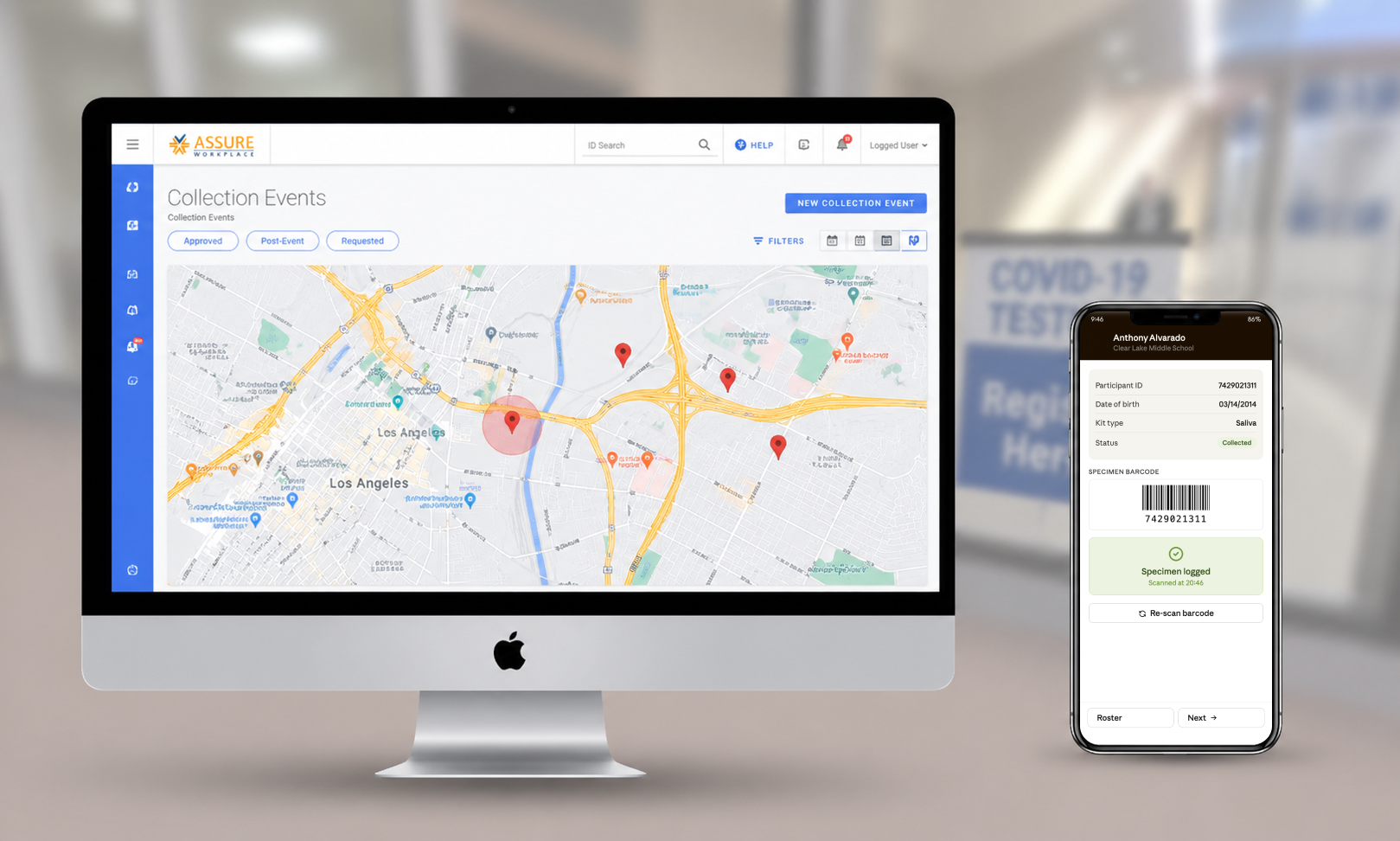
Spectrum was originally built to help organizations manage employee health testing — a straightforward product for a predictable need.
Then Covid hit. Clinics closed or became overwhelmed. The demand for testing surged. The existing model — fixed locations, scheduled appointments, clinical infrastructure — couldn't keep up. Organizations needed testing to come to their people, not the other way around.
The company made a call: build a mobile clinic solution. Fast.
This wasn't a planned product initiative. It was a response to a crisis — designed under pressure, with real stakes, and very little time.
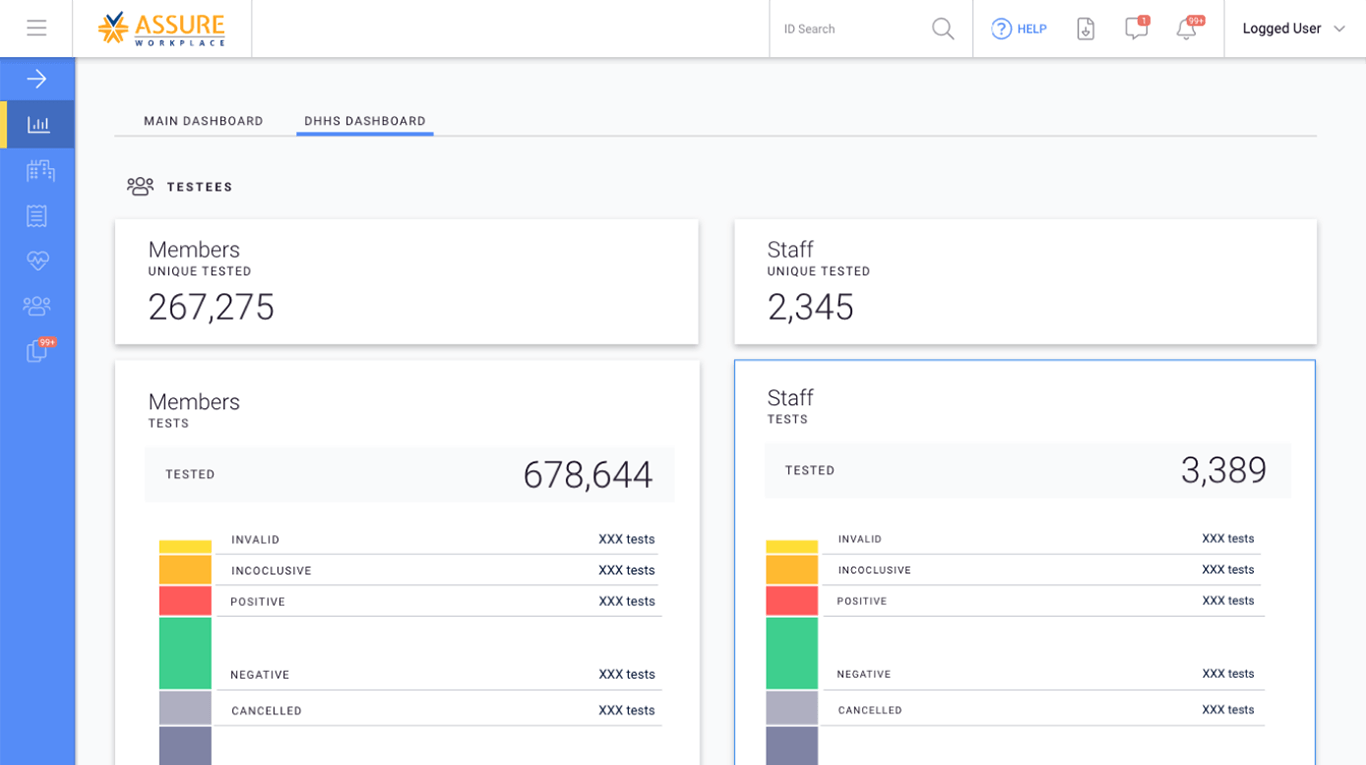
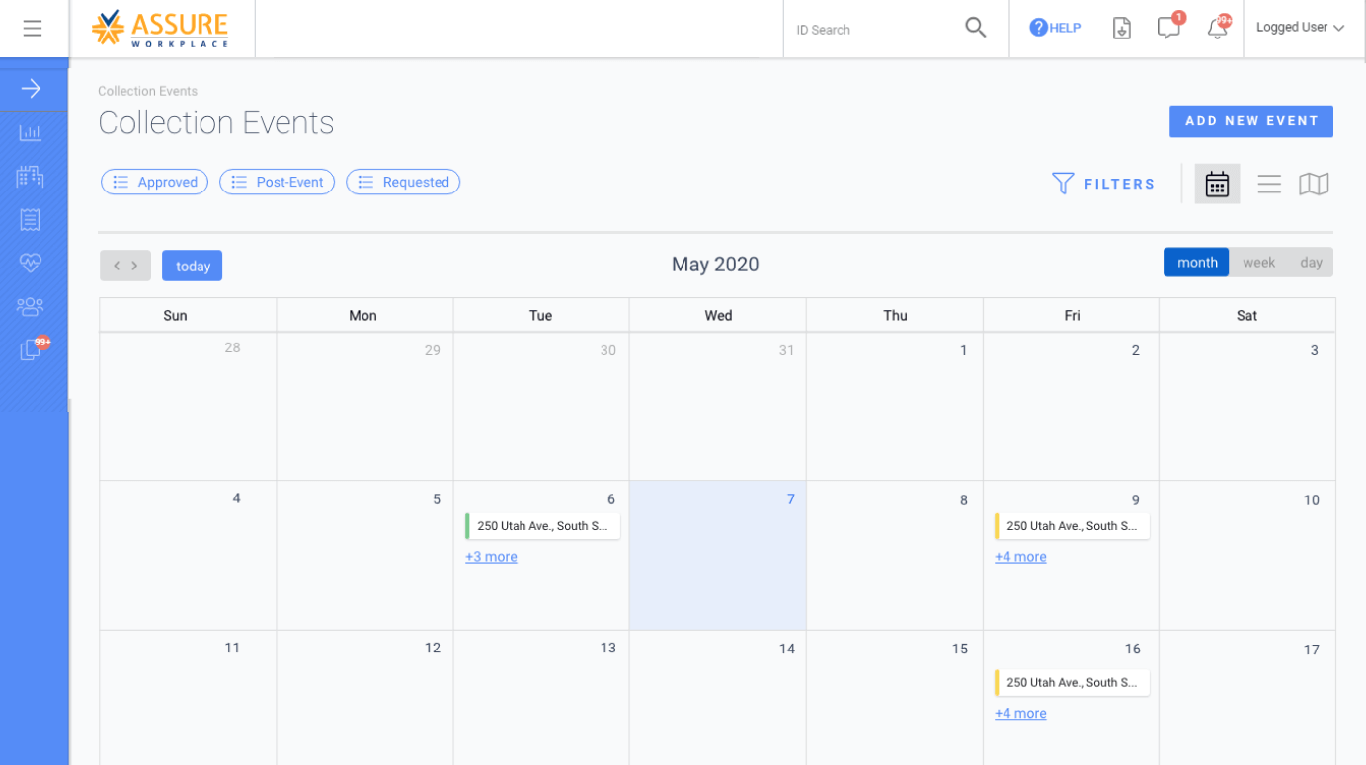
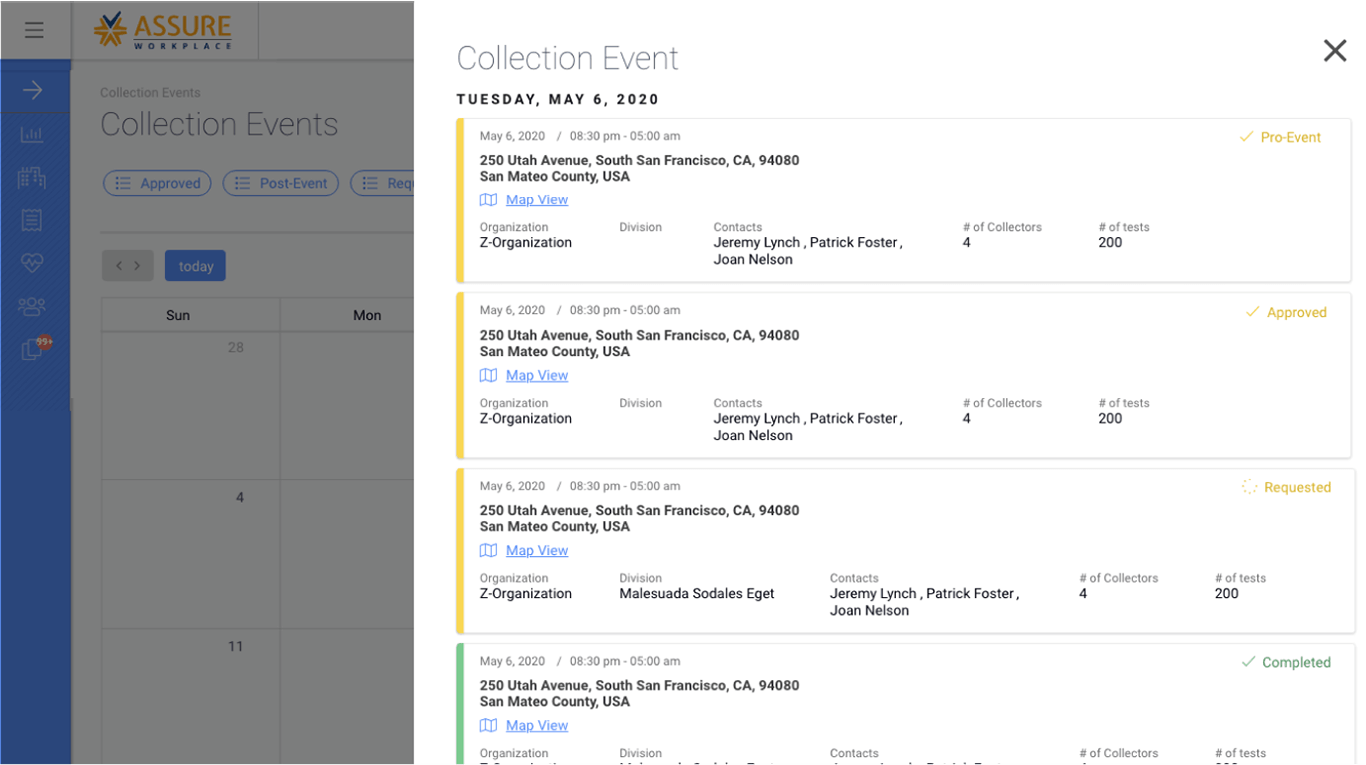
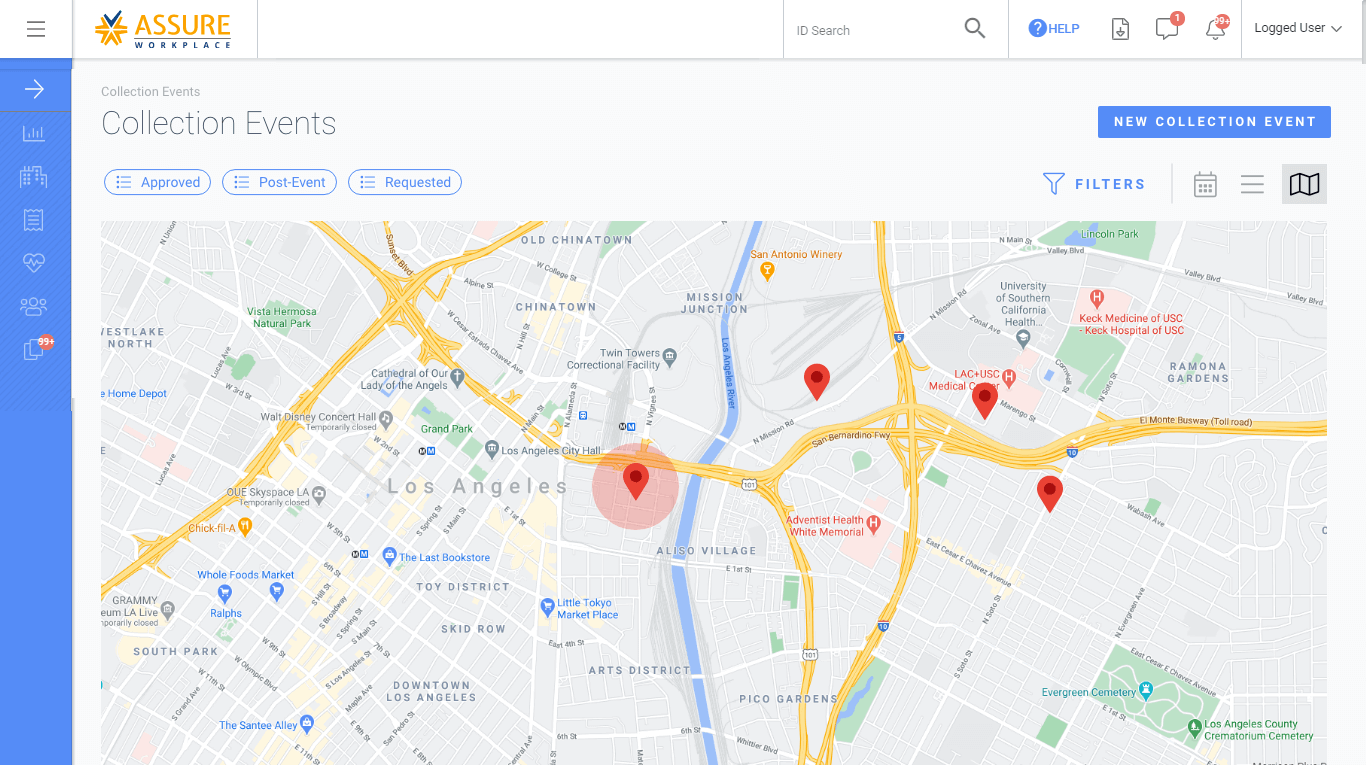
The existing Spectrum web app — what we were already building before the pivot to mobile clinics:
Mobile clinics operate nothing like fixed ones. The constraints are physical, environmental, and human — and the app had to account for all of them.
One-Handed Use
Nurses administering tests needed to swab with one hand and scan with the other. The app couldn't require two hands to navigate — every interaction had to work with a single thumb.
No Desk, No Mouse
There's no workstation in a parking lot. The entire workflow had to be designed for a phone — held, not propped — in variable lighting, often while wearing gloves.
Speed Under Pressure
Mobile clinics process high volumes of people in short windows. Every extra tap or moment of confusion had a real cost — in throughput, in stress, and in the experience of the people being tested.
No Room for Error
Test results are medical data. The app had to be clear, unambiguous, and hard to misuse — even in a chaotic, high-pressure environment.
There was no time for a traditional research phase. In-person study wasn't possible — so we relied on video calls, a medical officer, and the nurses who would actually use this in the field.
That was enough — if we asked the right questions.
Conversations with the People Doing the Work
We spoke directly with the medical officer and on-site nurses — not to validate assumptions, but to understand their actual workflow from the moment they arrived at a site to the moment they packed up. What did they carry? What did they do with their hands? Where did things go wrong?

Mapping the Physical Workflow
We mapped the step-by-step process of running a mobile clinic — not just the digital touchpoints, but the physical ones. Understanding the sequence of actions helped us design an app that fit into the work, rather than interrupting it.
Designing for the Constraint
One-handed use became the design principle that shaped everything — tap targets, navigation flow, confirmation patterns. If it couldn't be done with a thumb, it didn't ship.
Rapid Iteration
With a short runway and high stakes, we moved fast — designing, reviewing with the clinical team, and refining. No lengthy sign-off cycles. Just tight feedback loops with the people who knew what the field actually looked like.
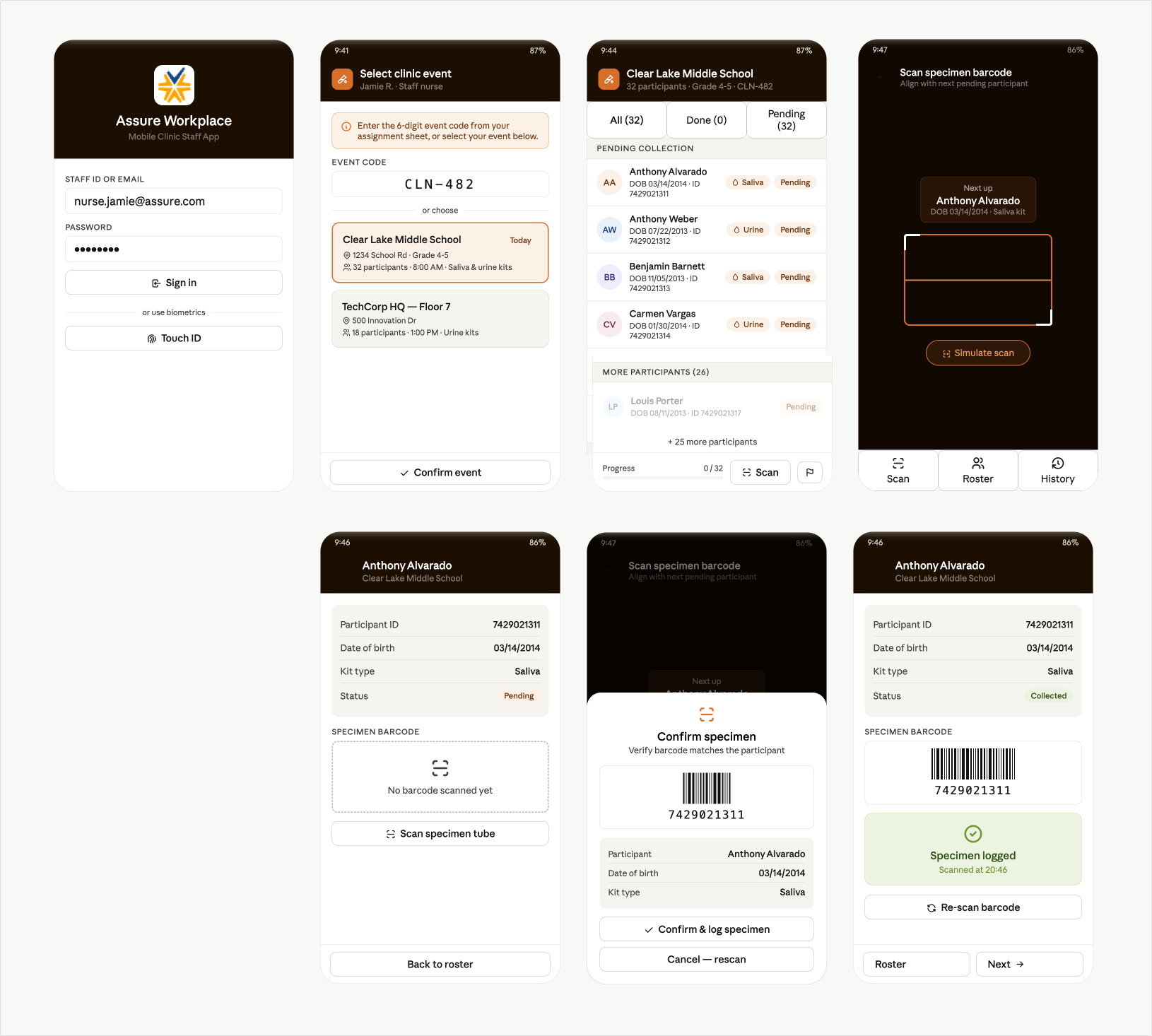
The mobile clinic launched and ran at scale. Then it kept going.
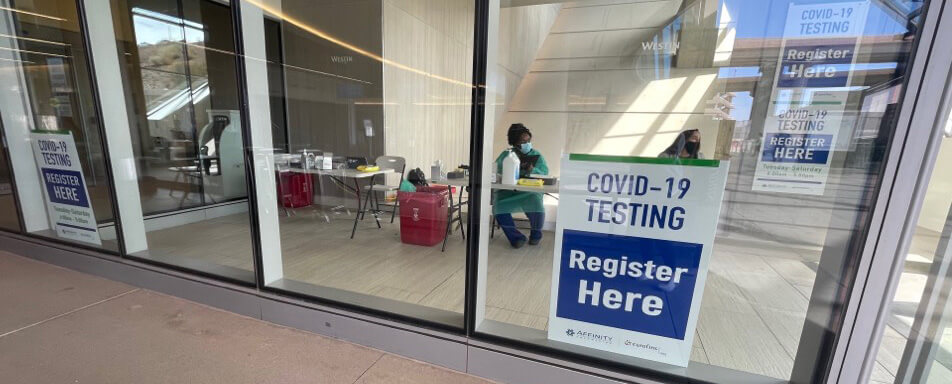
Mobile Clinics Deployed
The app powered mobile testing clinics across multiple organizations — running reliably in the exact conditions it was designed for.
Expanded to K–12
The success of the mobile clinic model opened a new use case — schools. Spectrum expanded to serve K–12 institutions, bringing the same mobile-first testing workflow to a new population with its own set of needs.
Built for a Crisis, Designed to Last
What started as an emergency response became a durable product. The constraints that shaped the design — speed, one-handed use, field conditions — turned out to be the right constraints for the long term.