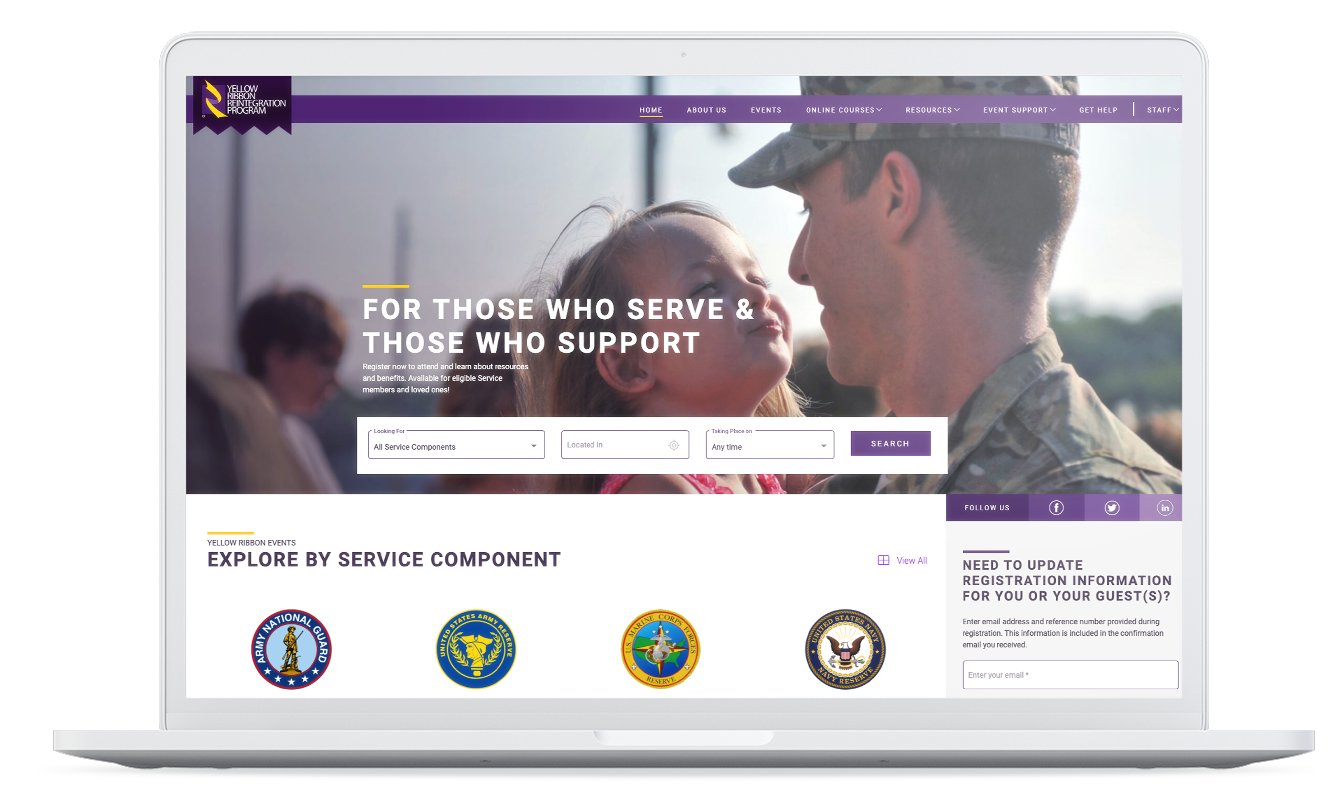
The Department of Defense runs thousands of events every year — employment support programs, reintegration seminars, family and marriage workshops, reunion events — all under the mission of Stronger Bonds, Stronger Army. EventPlus is the platform that powers all of it.
The system handles the full lifecycle: event creation, marketing, registration, check-in, post-event surveys, and engagement tracking. But the version in use had been built in the early 2000s. The visual design was dated, the experience was fragmented, and the constraints of working with sensitive military data had created real friction for both program managers and participants. I was brought in to lead the redesign.
EventPlus serves two distinct user groups with very different needs and levels of system access.
Program Managers
Internal DoD staff responsible for creating and managing events — building event listings, configuring registration forms, sending marketing emails, monitoring attendance, and reviewing post-event survey results.
Event Participants
Veterans, active service members, and their families — browsing the event catalog, registering for events, checking in on the day, and completing post-event surveys. Due to security requirements, no persistent accounts are permitted.
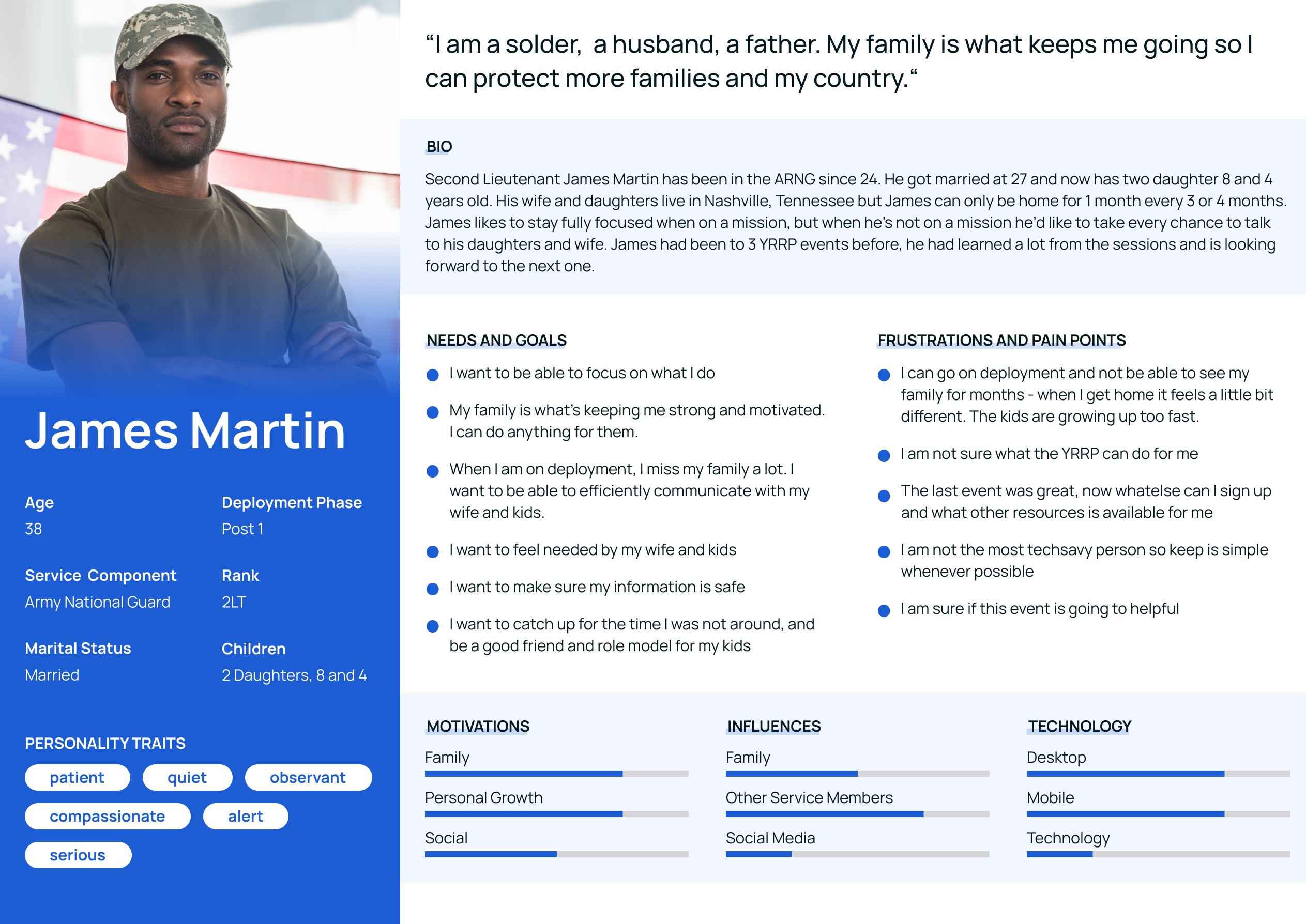
Security restrictions meant I couldn't speak directly with veterans or active members. I had to find another way in.
I ran in-depth interviews with four program managers who used EventPlus regularly to build and manage events. They gave me a clear picture of the system's operational pain points — the clunky event creation flow, the lack of useful survey analytics, and the difficulty of reaching participants after an event ended.
For the participant side, I embedded a survey directly into the existing system and ran it for a month. It wasn't a perfect substitute for interviews, but it surfaced patterns I wouldn't have found otherwise — and it gave participants a voice in a redesign that was being built for them.
Program Manager Interviews
Four interviews with frequent EventPlus users. Focused on the event creation workflow, marketing tools, and how they used post-event data. Surfaced consistent frustration with the fragmented experience and lack of visibility into participant engagement.
In-System Survey
Deployed a survey inside the existing EventPlus system for one month to gather feedback from participants. Reached veterans, active members, and family members who couldn't be interviewed directly due to security protocols.
IA Audit with Engineering
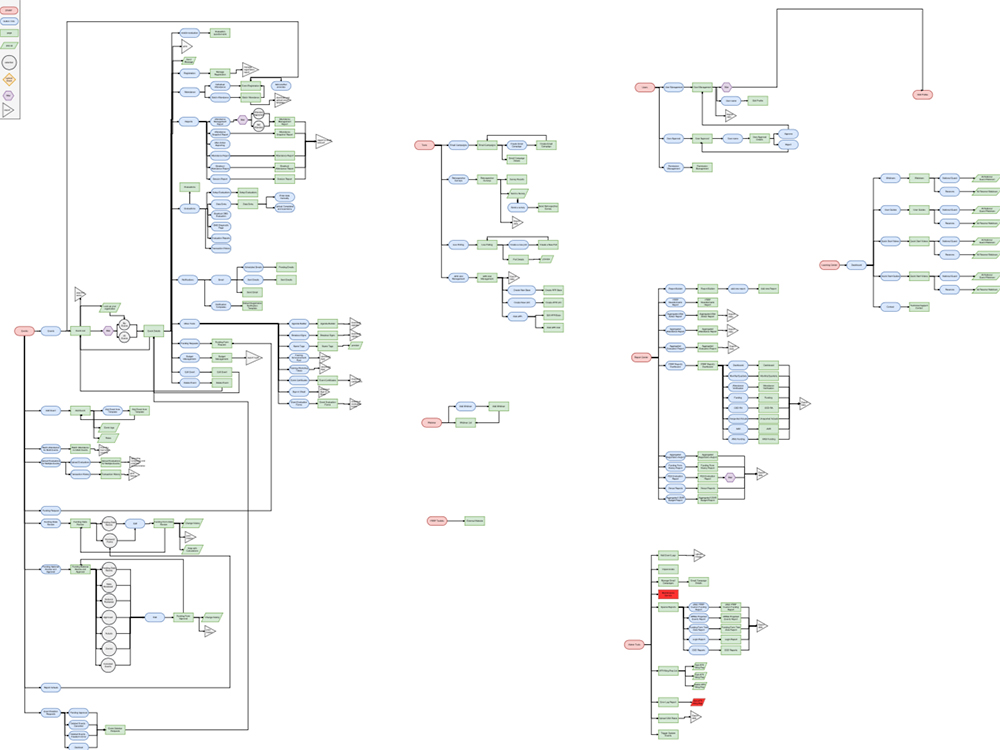
Worked with the engineering team to audit the existing information architecture. Found numerous unused pages with no clear purpose — legacy artifacts from earlier versions of the system that had never been cleaned up. Mapped the top-used pages and flows to focus the redesign scope.
The biggest friction point wasn't the visual design — it was a data constraint that made every registration feel like starting from scratch.
Due to DoD security requirements, EventPlus cannot store participant data for more than 15 days after an event ends. That means no persistent accounts, no saved profiles, no pre-filled forms. Every time a participant wants to register for a new event, they fill out the entire registration form again — and it's not a short one.
The same constraint broke re-engagement. The only marketing email in the system was sent immediately after an event ended — combining a feedback survey with event recommendations in a single message. Once the 15-day window closed, there was no way to reach participants again. The system had no mechanism for keeping people connected to the program between events.
The 15-day data retention rule wasn't going away. The design challenge was to work within it — reducing friction where possible, and finding new ways to maintain engagement without storing data we weren't allowed to keep.
Repetitive Registration
No persistent accounts meant participants re-entered all their details for every event. A long form with no memory — repeated every time, for every event.
No Re-engagement Window
Marketing emails were tied to registration data, which expired after 15 days. Once the window closed, there was no way to reach participants for future events.
Overloaded Post-Event Email
The single post-event email tried to do too much — collect feedback and market new events at the same time. Neither job was done well.
Dated System, Dated Experience
The early-2000s interface wasn't just visually outdated — the interaction patterns were unfamiliar to a generation of users who'd grown up with modern web products.
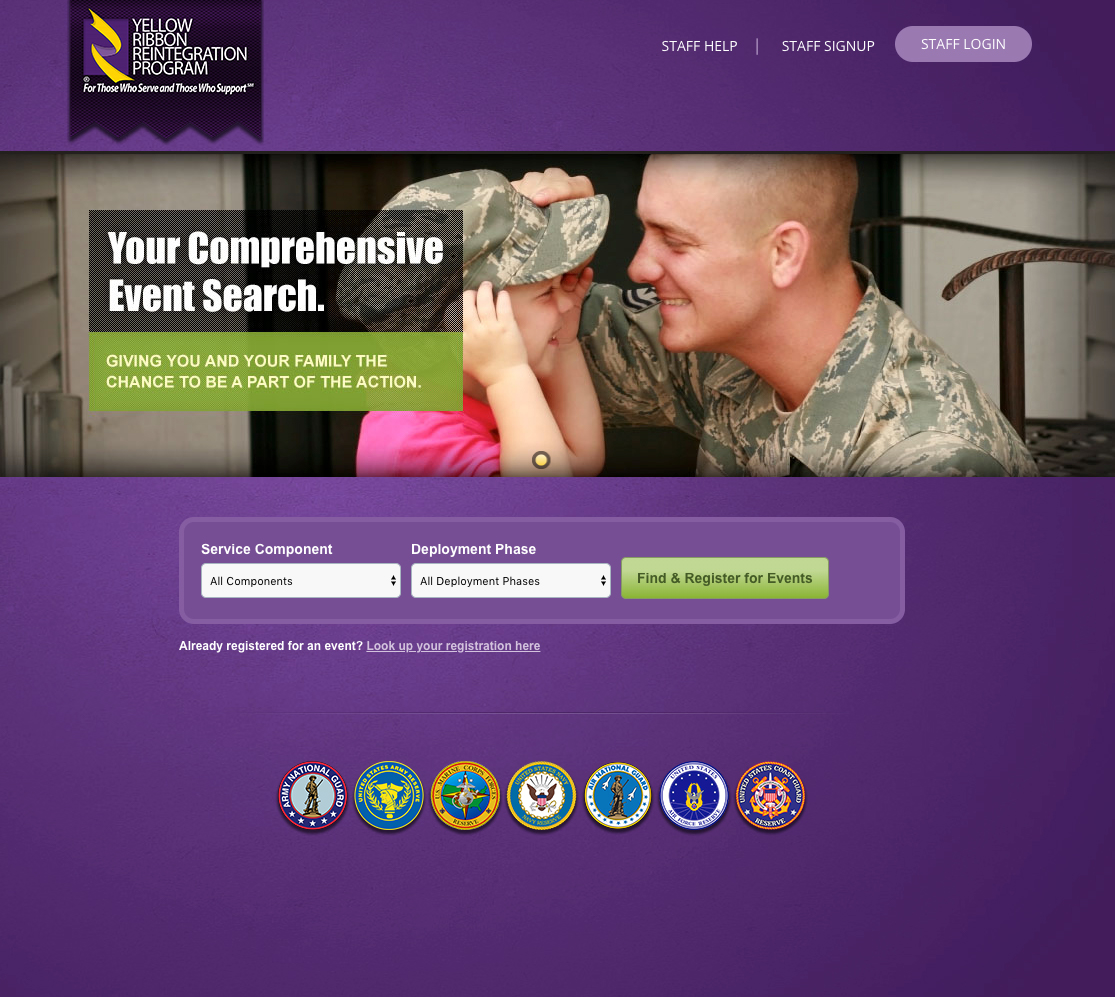
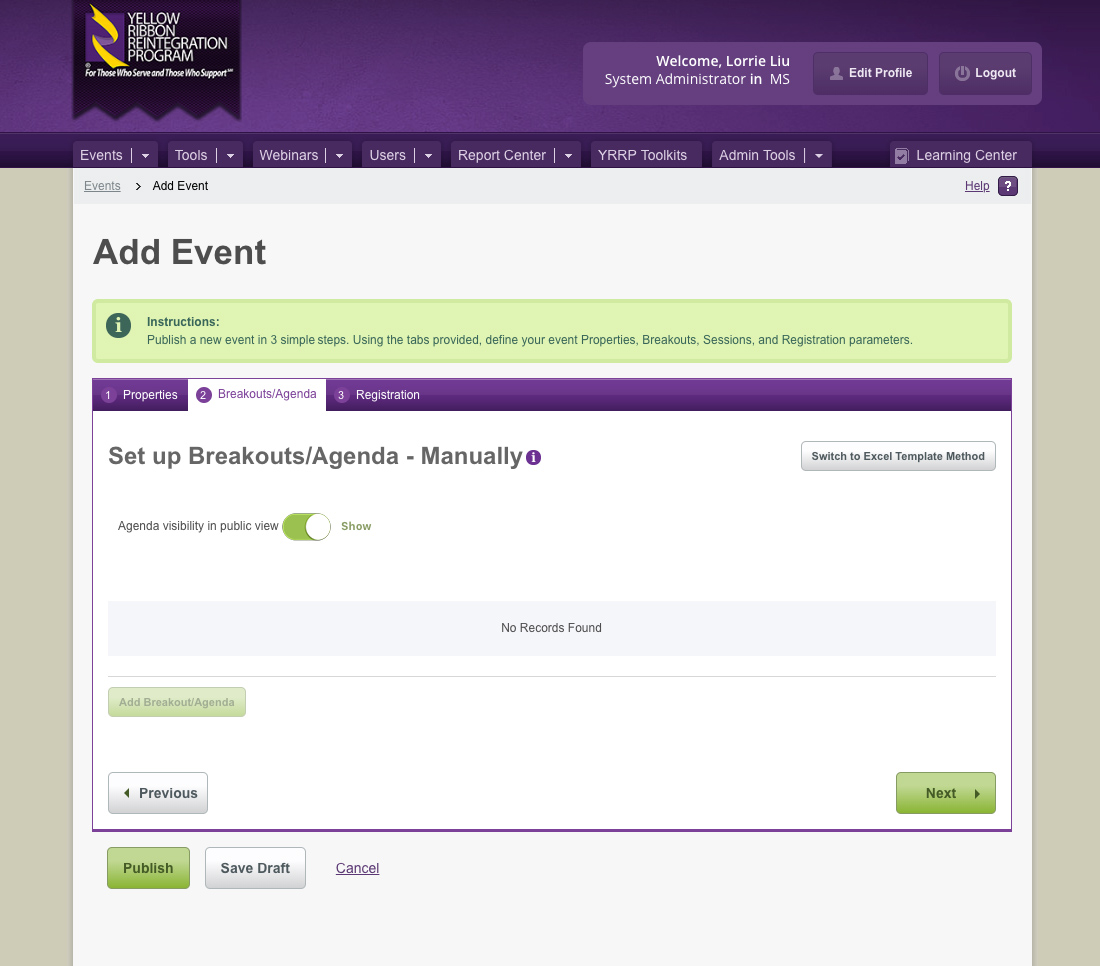
The dated legacy system — homepage and event creation flow.
Three decisions shaped the redesign — two of them directly addressing the data constraint, one focused on reducing registration friction.
Decouple marketing from registration data
I proposed a separate, opt-in email list — completely decoupled from event registration. Participants could sign up to receive program updates and event recommendations without that data being tied to any registration record. Because it's a standalone list with its own data lifecycle, it isn't subject to the 15-day retention rule. This gave the program a sustainable re-engagement channel for the first time.
Split the post-event email into two
The original single post-event email tried to collect feedback and market new events simultaneously — doing neither well. I split it into two: a survey email sent immediately after the event, and a dedicated marketing email sent on day 10, while participant data was still within the retention window. Participants who registered within 5 days of receiving the marketing email could have most of their details pre-filled — reducing the re-registration burden significantly.
Simplify registration with progressive disclosure
We audited every field in the registration form and separated required information from optional data. The core form was shortened to what was genuinely needed to register. Optional questions — preferences, accessibility needs, additional context — were moved to a post-registration step, after commitment was already made. Less friction at the point of sign-up, without losing the data that mattered.
A new component library, refreshed information architecture, and redesigned flows for the most-used pages — built in close collaboration with UX writers and the engineering team.
The redesign focused on the pages that mattered most: the homepage, event creation, registration flow, post-event surveys, and the marketing email template.
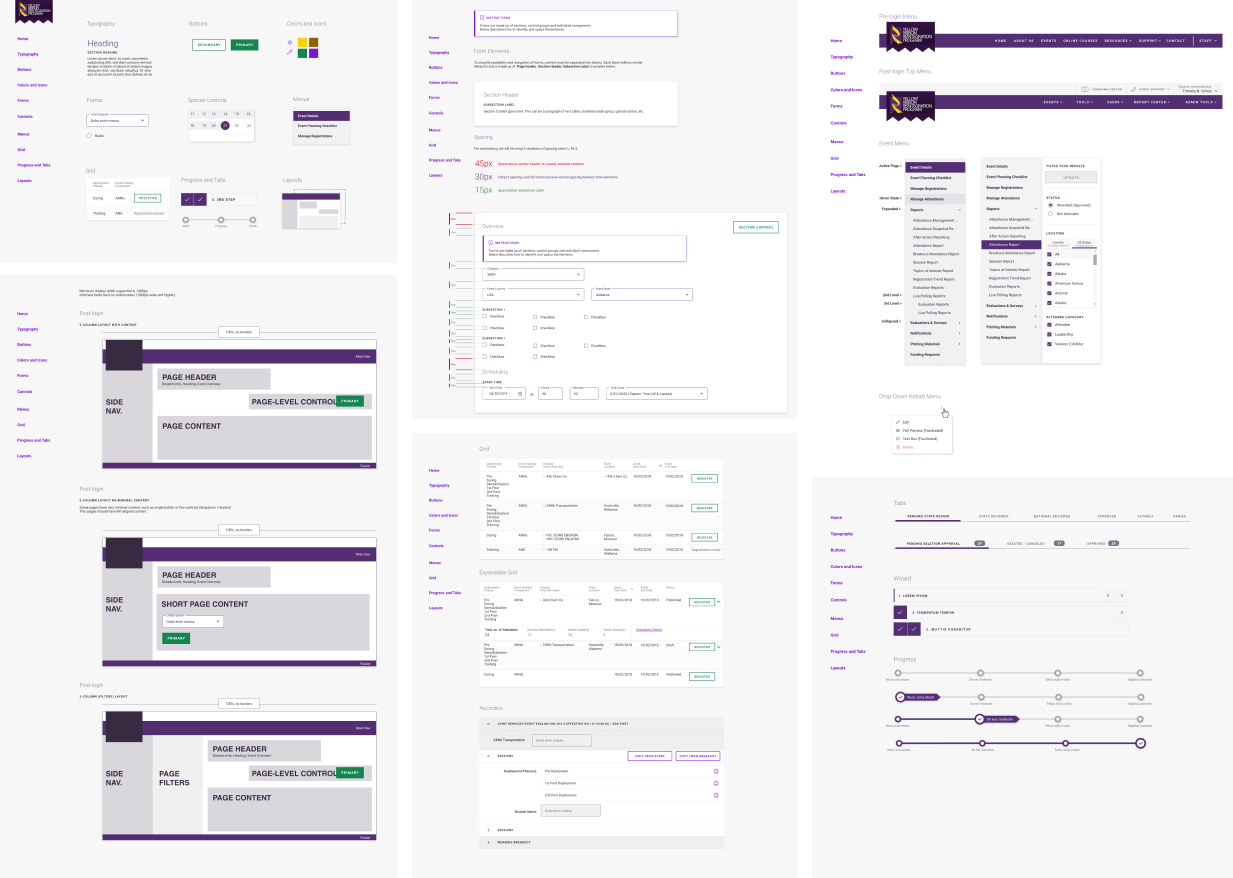
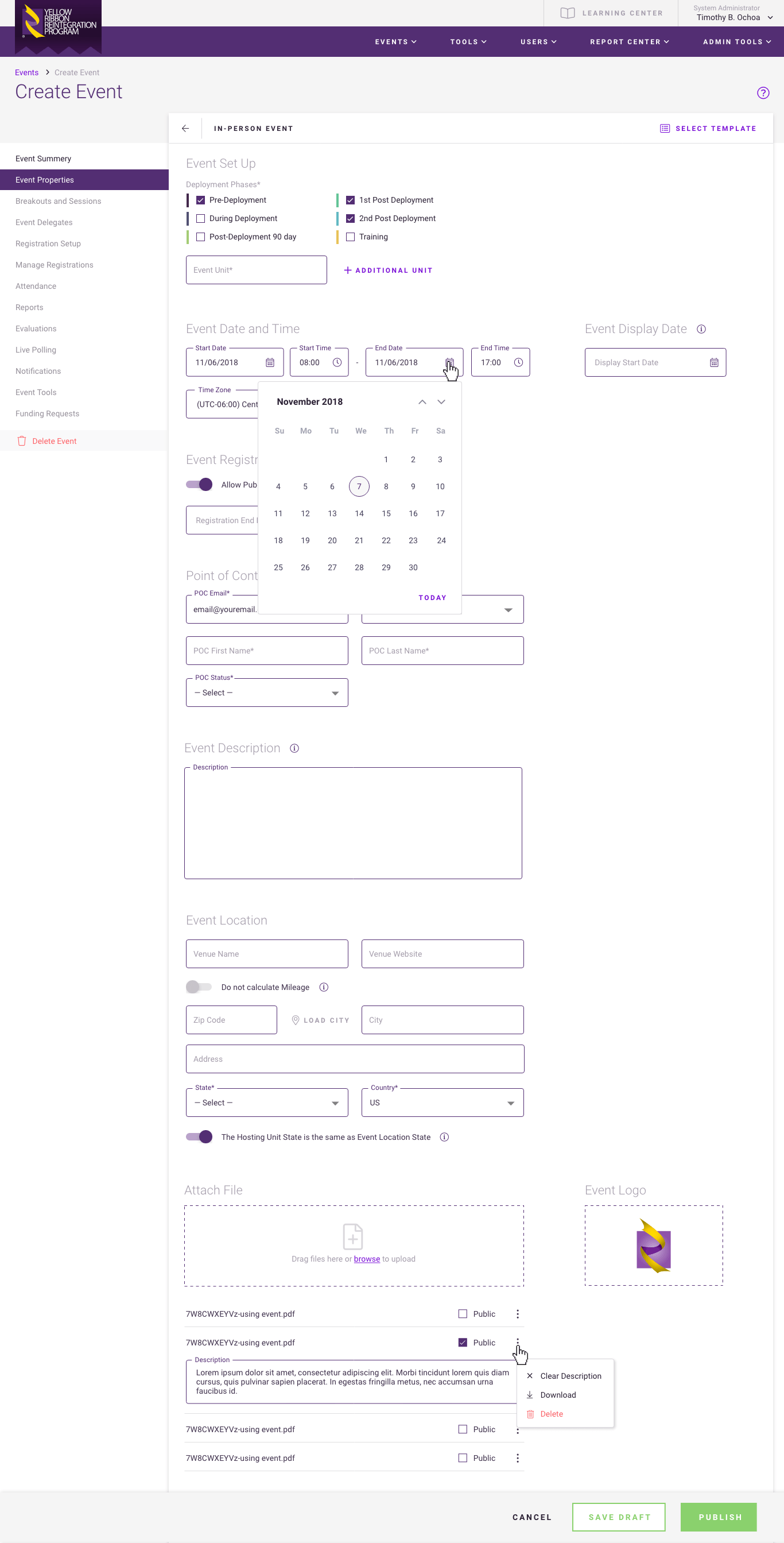
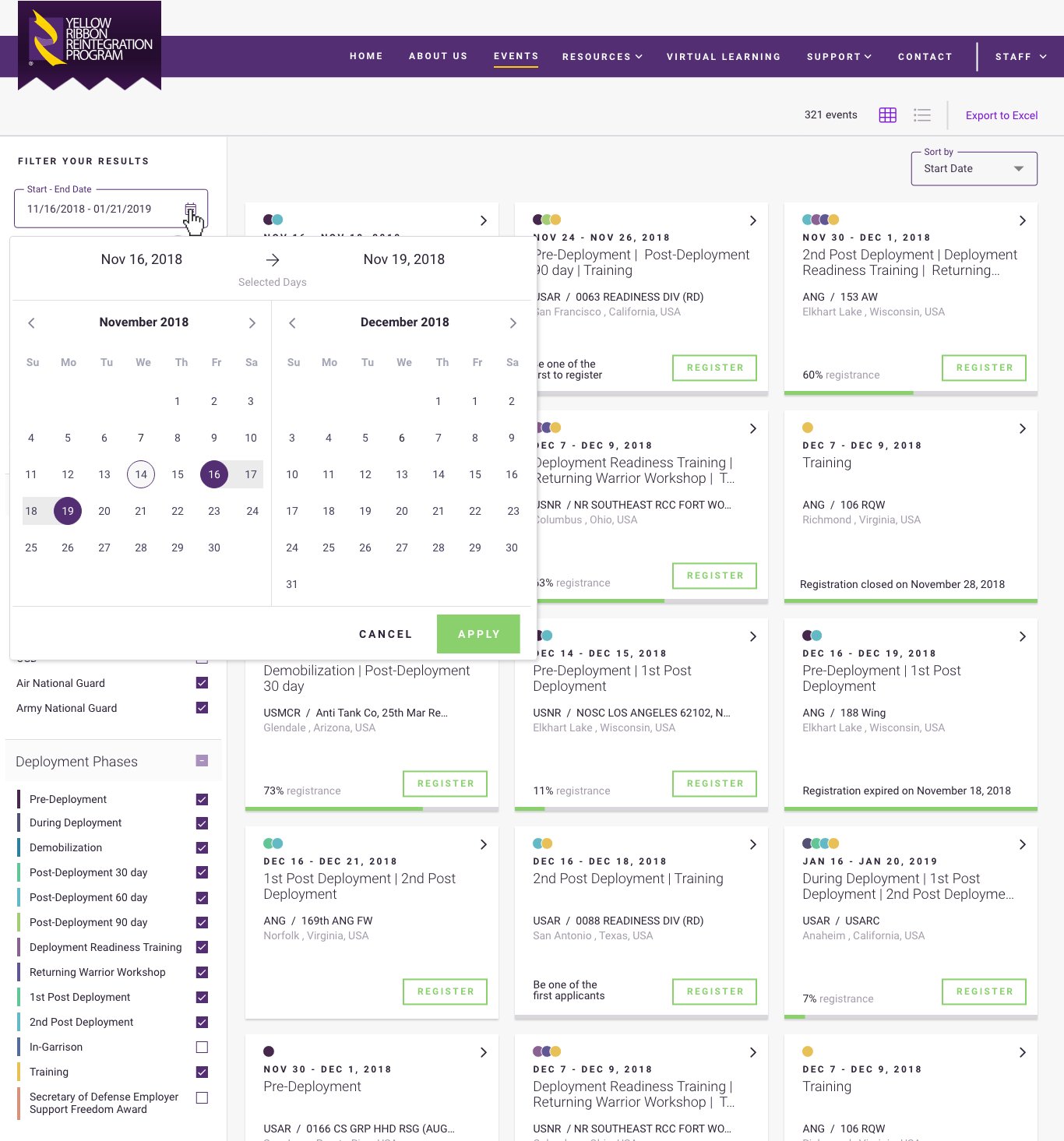
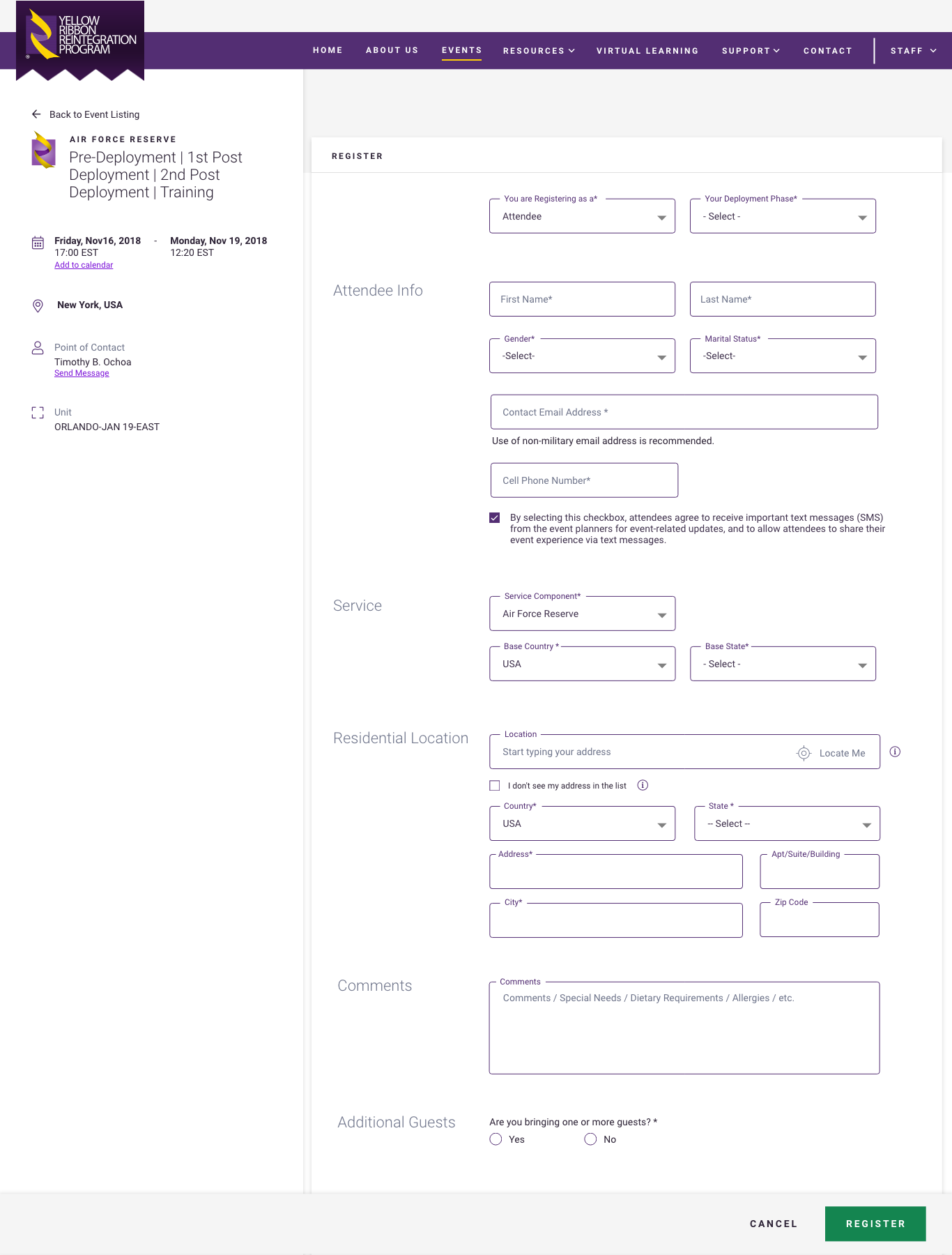
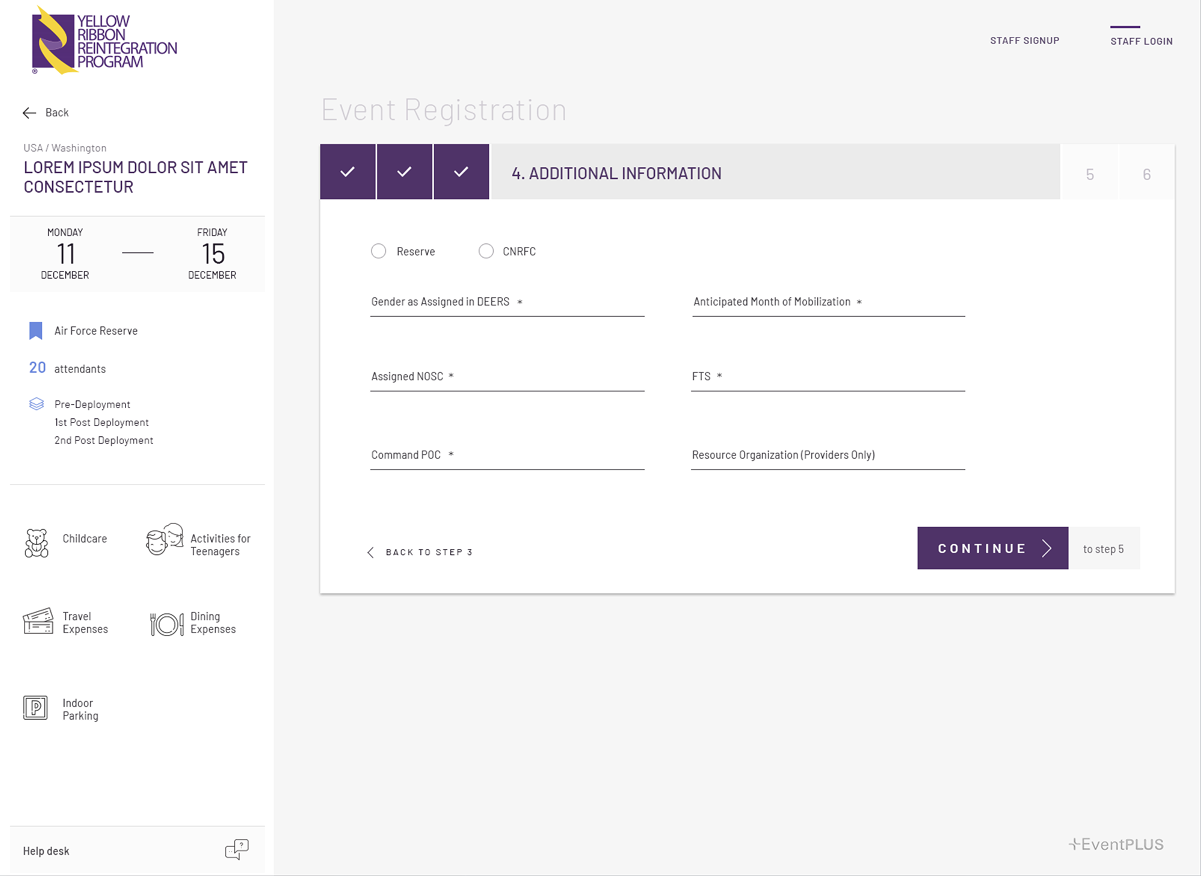
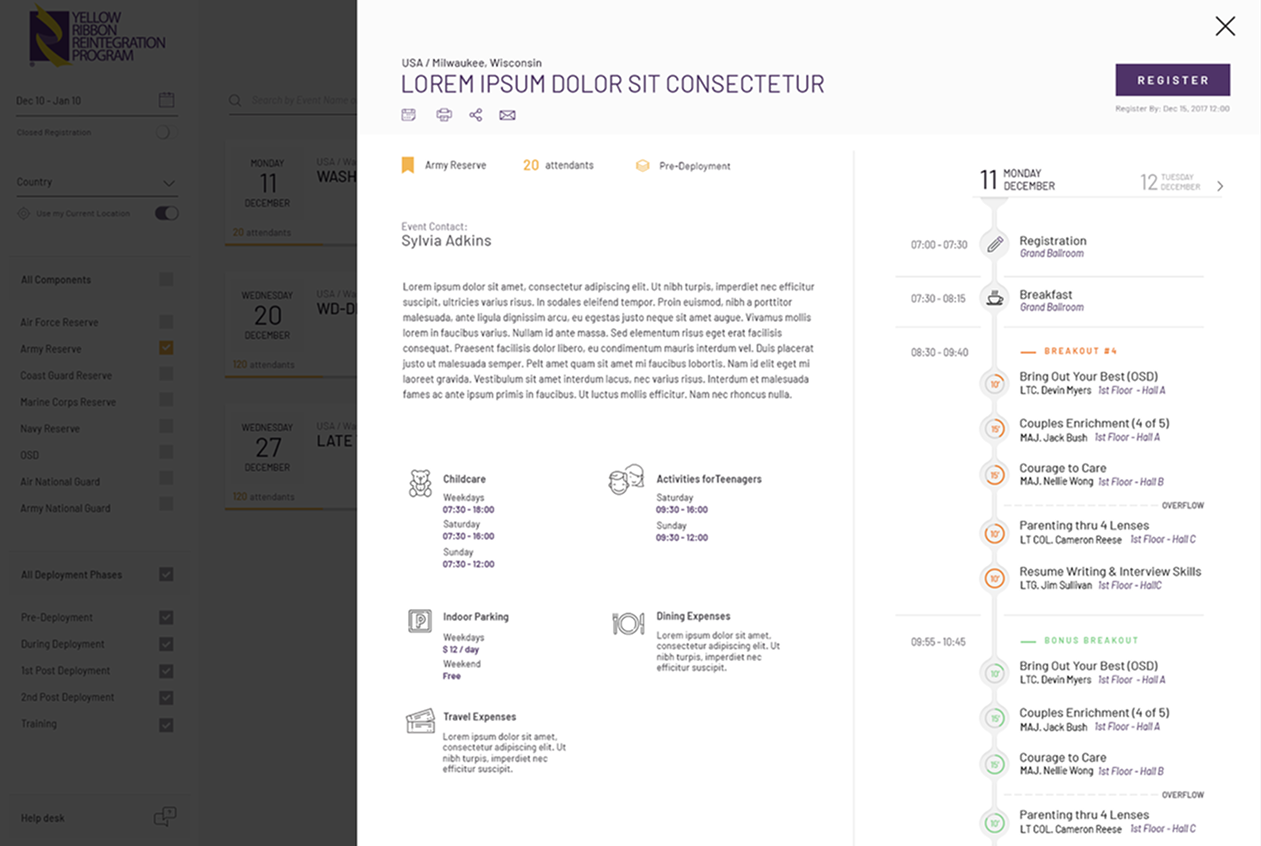
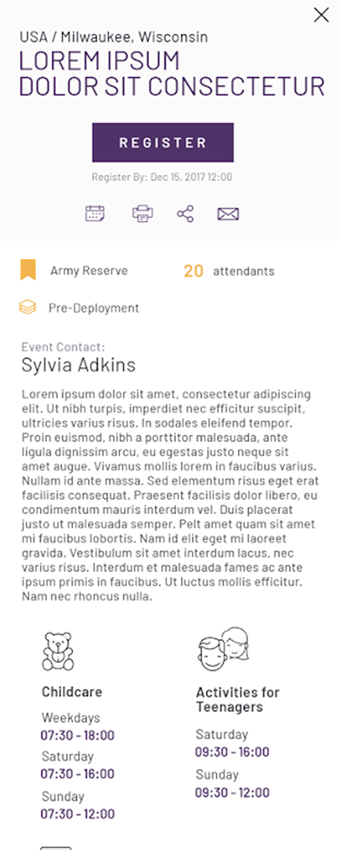
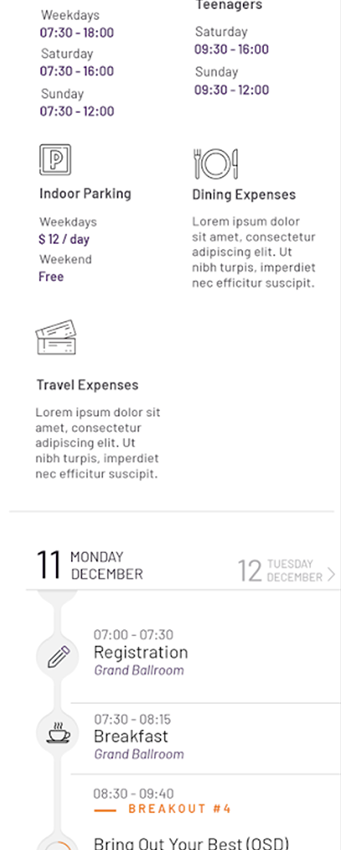
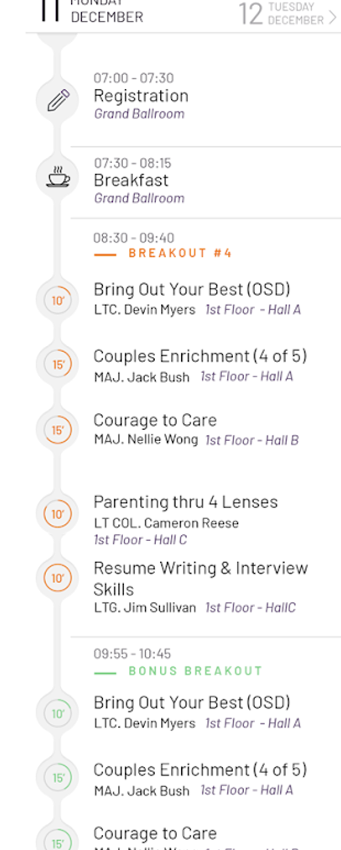
The redesign launched and the results validated the core bets — particularly around re-engagement and registration friction.
NPS Score
4.0 → 4.4Post-launch survey showed a meaningful improvement in overall satisfaction — a signal that the redesign landed well with both program managers and participants.
Re-registration Rate
+8%More participants returned to register for subsequent events — a direct result of the simplified registration form and the new re-engagement email channel.
Event Participation
78% → 83%Attendance rate increased by 5 percentage points — meaning more registered participants actually showed up, a sign of stronger engagement with the program overall.
Scale
10,000+ eventsIn 2020, EventPlus hosted over 10,000 events worldwide — supporting the DoD's mission to strengthen bonds between service members, veterans, and their families.