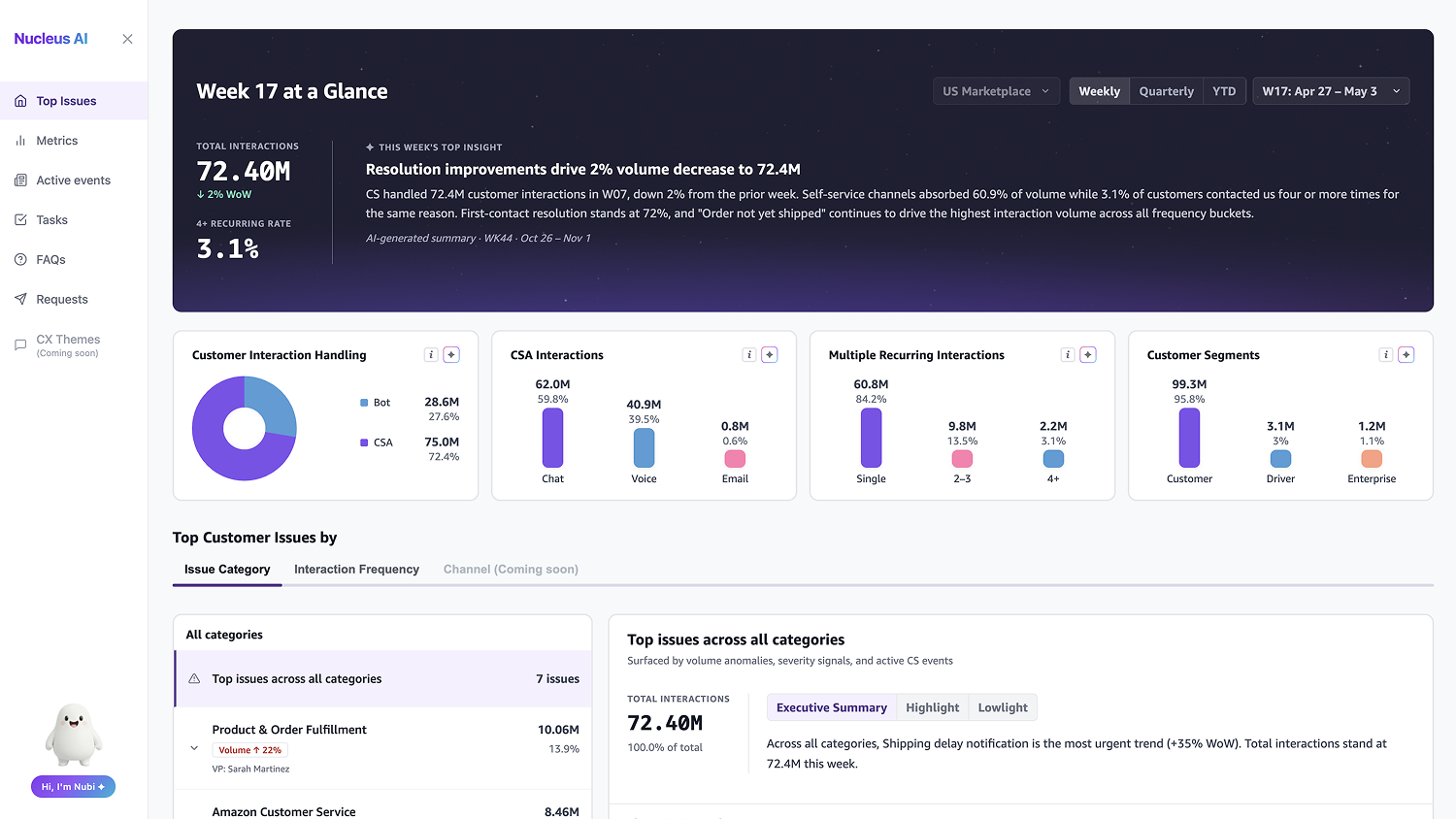
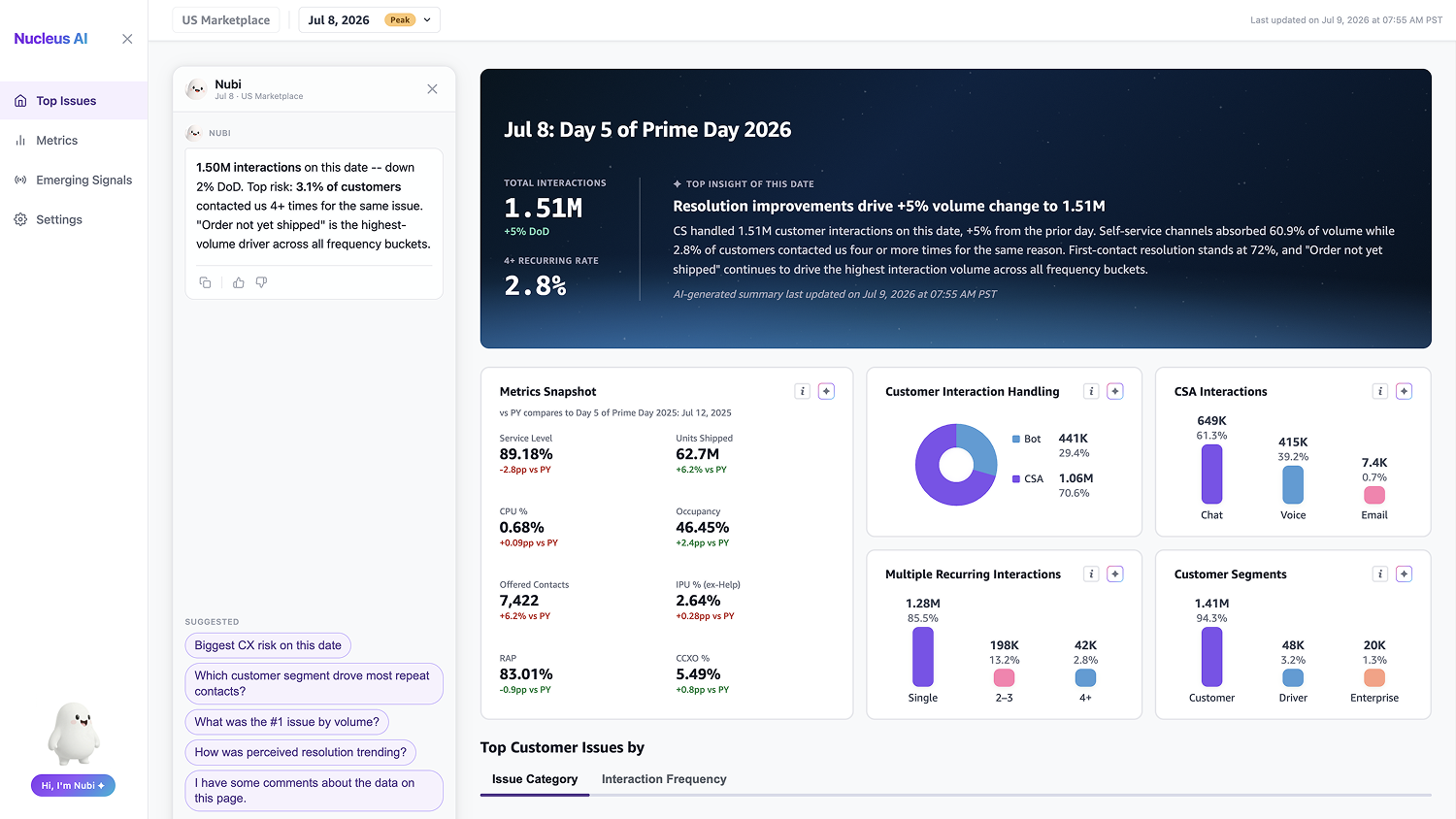
Amazon's Customer Service department handles over 1 billion customer interactions every year. My team owned Heartbeat — a legacy transcript and taxonomy analysis tool that categorized and summarized customer contacts to help business and program owners uncover service defects.
Heartbeat was functional, but it was showing its age. The tool could surface signals, but it couldn't explain them. It could tell you something was wrong — not why.
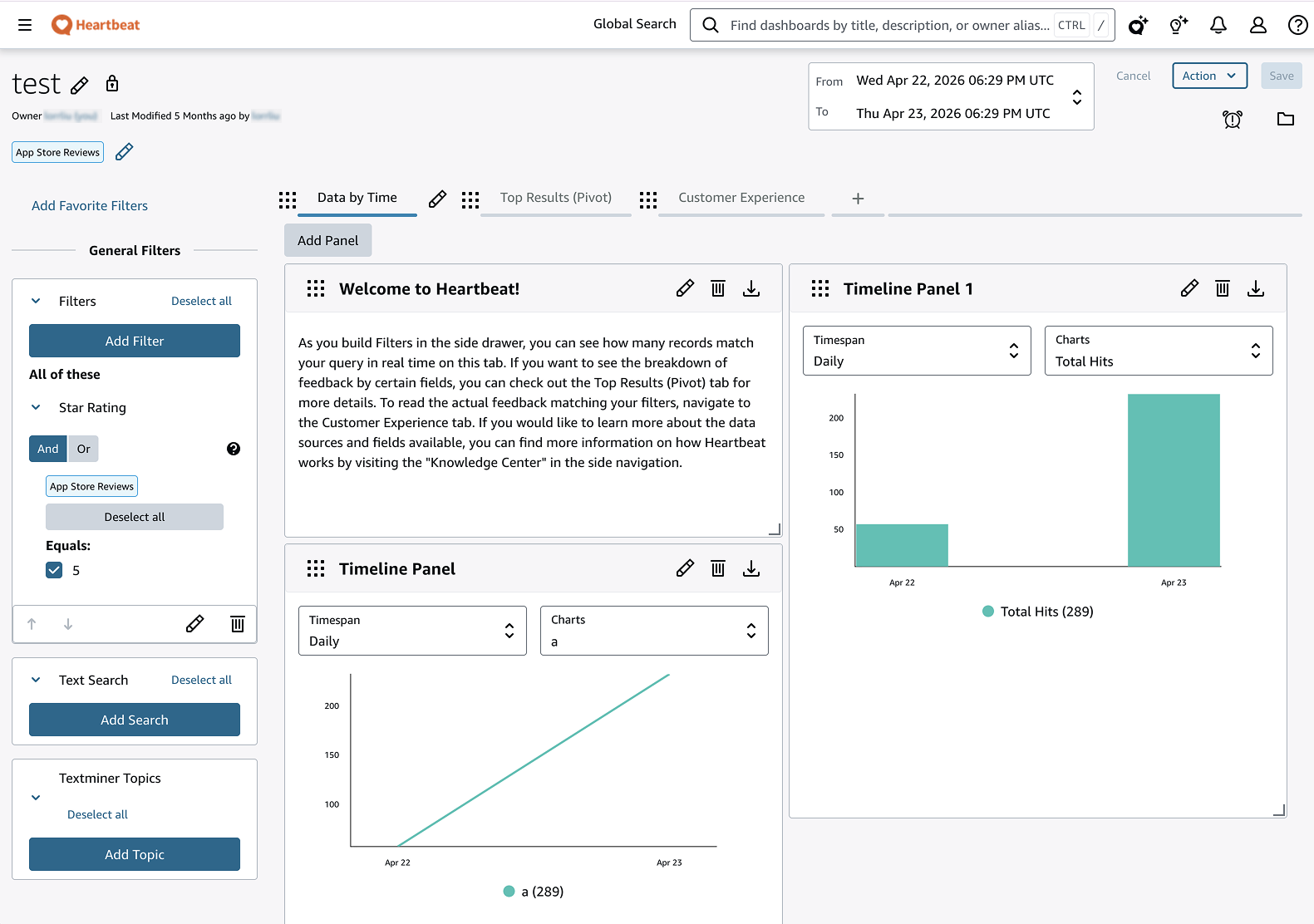
Three critical gaps were preventing the team from acting on customer service issues quickly and effectively.
No Root Cause Analysis
It took hours — sometimes days — to uncover the real driver behind a spike in contacts. Customers in one region might call about delayed deliveries, others about wrong addresses, but the actual root cause could be a software glitch in the delivery driver app. The tool showed symptoms, not causes.
No Proactive Alarming
The system only surfaced issues reactively — after a signal had already grown large enough to detect. To meaningfully improve Customer Service quality, we needed to catch issues before they escalated and act on them upstream.
Unclear Issue Ownership
Most resolutions required collaboration across multiple teams. But without a clear ownership model, issues fell through the cracks. Nobody knew who was responsible for following up.
Use AI to analyze transcripts at scale, apply 5-why methodology to surface root causes, and close the loop with human-in-the-loop feedback and task ownership.
The core vision: an intelligent system that doesn't just detect problems — it explains them, assigns them, tracks them, and learns from the humans reviewing its analysis.
AI-Powered 5-Why Analysis
Automatically trace customer contacts back to root causes using structured reasoning, with confidence scores and real customer anecdotes surfaced as evidence.
Human-in-the-Loop
Users reviewing the analysis can provide feedback to validate or correct the AI's reasoning — improving the model over time and keeping humans in control of critical decisions.
Task Assignment & Follow-up
Issues can be assigned to owners across teams, with built-in follow-up tracking so nothing falls through the cracks.
Impact Analysis
After actions are taken, the system analyzes whether they moved the needle — closing the feedback loop between intervention and outcome.
We designed a team of specialized AI agents — each with its own expertise, personality, and set of skills — that collaborate to deliver insights no single model could produce alone.
Rather than one monolithic AI, the system is built as a crew of focused agents. Each agent owns a specific domain — pulling customer anecdotes, running 5-why analysis, detecting anomalies, retrieving policies, analyzing concessions, or tracking trends. Users interact with the team through a unified interface, but behind the scenes each agent contributes its specialty to build a complete picture.







A growing team of specialized agents, each with a distinct role in the analysis pipeline.
The design challenge wasn't just building one AI — it was designing a system where multiple agents with different specialties collaborate coherently, while keeping the user experience simple and the outputs trustworthy.
When vibe coding tools are available, anyone can jump in and start designing. As a designer, you can't stop that — but you can steer the team back onto the right path.
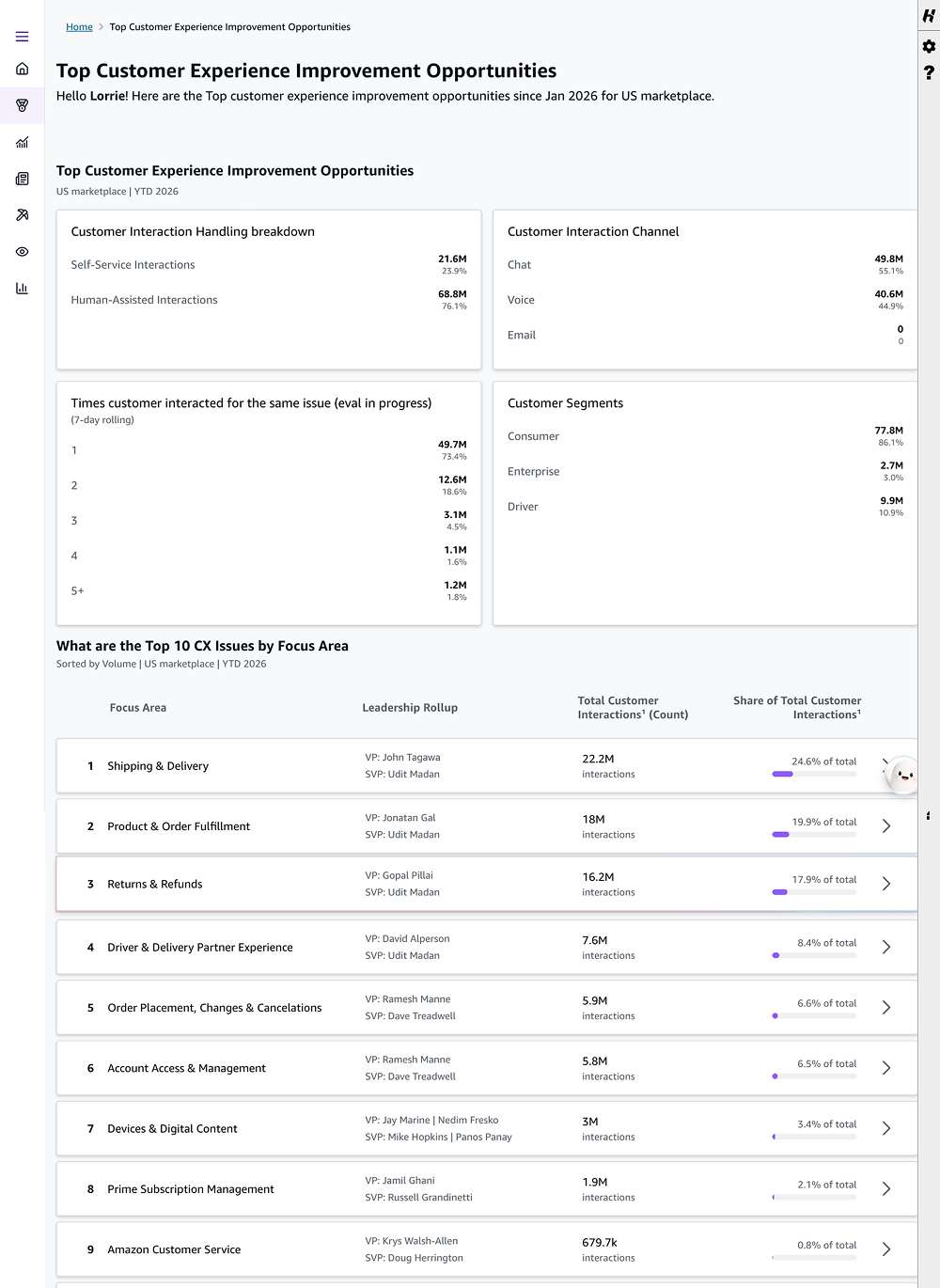
The product and tech team jumped into design using vibe coding before any research happened. As a designer, my job was to take a step back — talk to users, understand the actual problem and pain points. The developer-built prototype wasn't wasted though: it gave us a clear picture of what data was readily available and what the system could realistically surface.
Team Jumped Ahead — Lovable Prototype
Tech, product, and leadership built a working prototype in Lovable before any formal design work began. You can't stop people from vibe coding. The move was to adapt: use their build to understand what's technically possible, then bring the design rigor.
Stepping Back — Research & Interviews
I took a step back from the prototype and talked to CS team leaders directly — their jobs to be done, key initiatives, and pain points. Then tested the prototype with them to separate what resonated from what was just technically convenient.
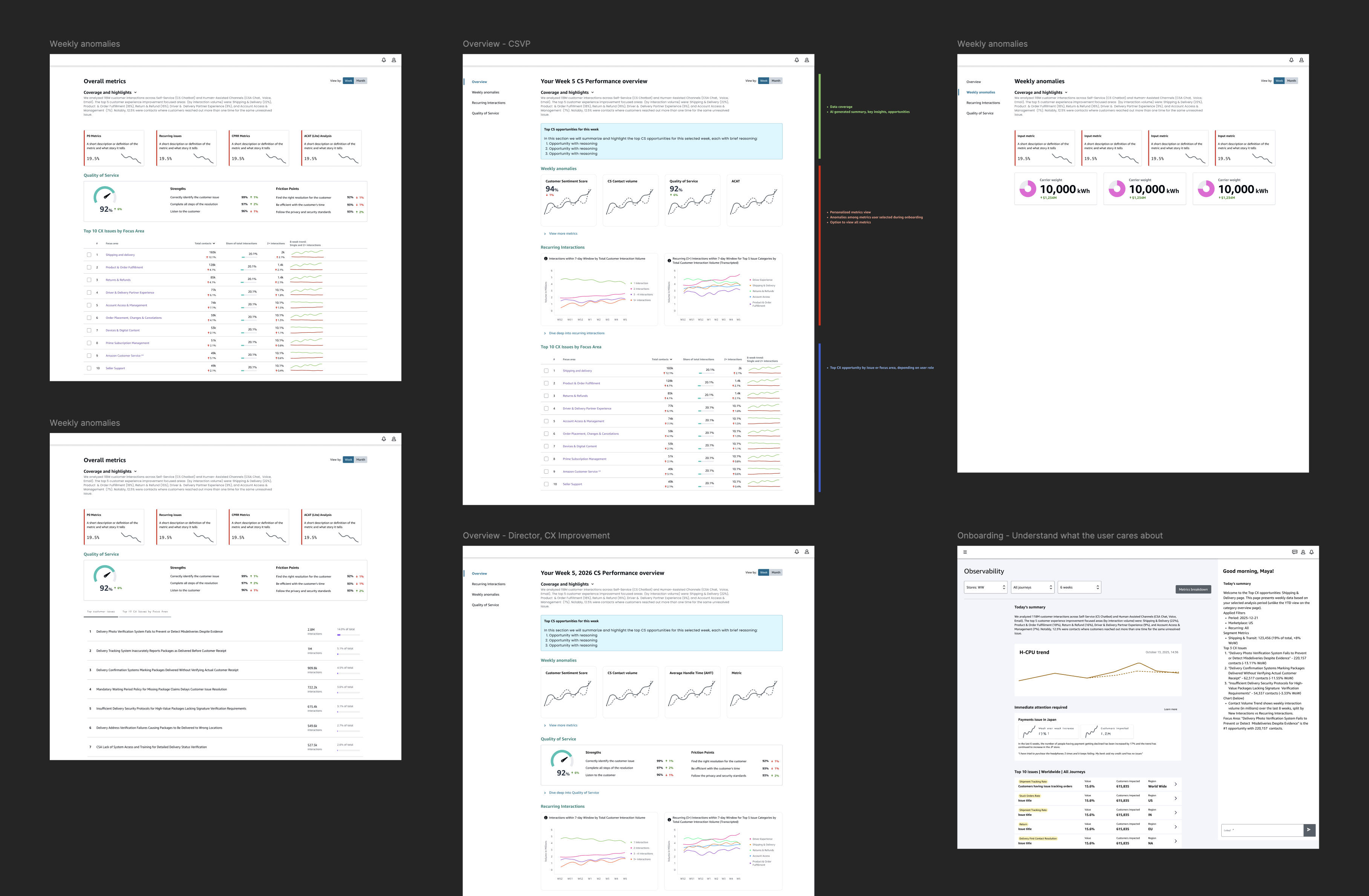
Quick Wireframes in Figma
Translated research findings into low-fidelity wireframes — fast, focused on structure and flow. Not pixel-perfect, just enough to define the right direction before building again.
Redesigned Using Vibe Coding — Kiro
Used the wireframes as input to Kiro and rebuilt the prototype from a design-informed foundation. This time grounded in user needs, not just available data. The result received strong positive feedback from leadership.

Redefining the Handoff
This forced a new handoff model: (1) design-initiated build, (2) UX handoff contract, (3) dev build version. Kiro-generated code is shared directly with front-end engineers as a starting point.
The question this project kept asking: if vibe coding makes iteration this fast, what is the designer's role? The answer: design owns the intent, the contract, and the feedback loop. Not just the pixels.
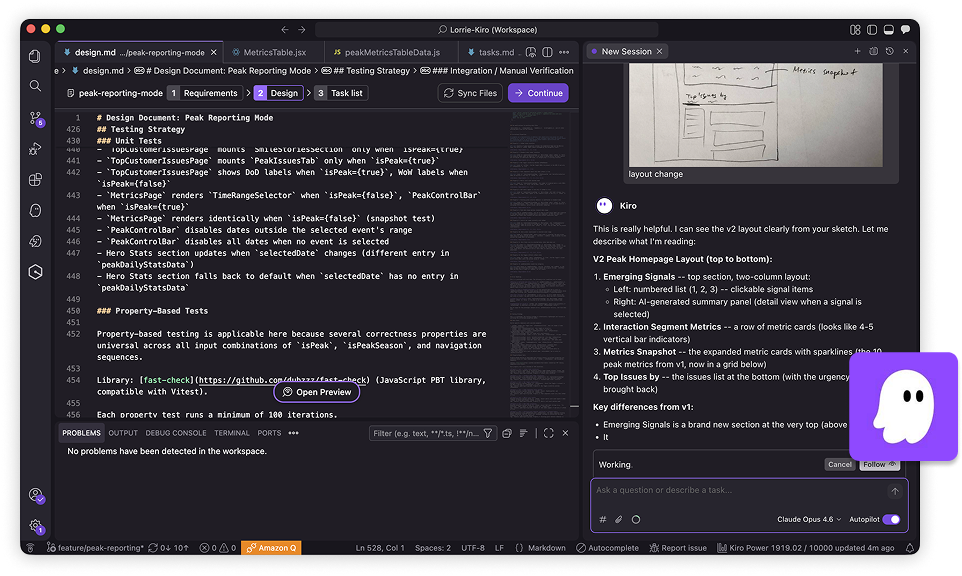
For demo purposes only — not the actual project or codebase, and does not contain any actual data.
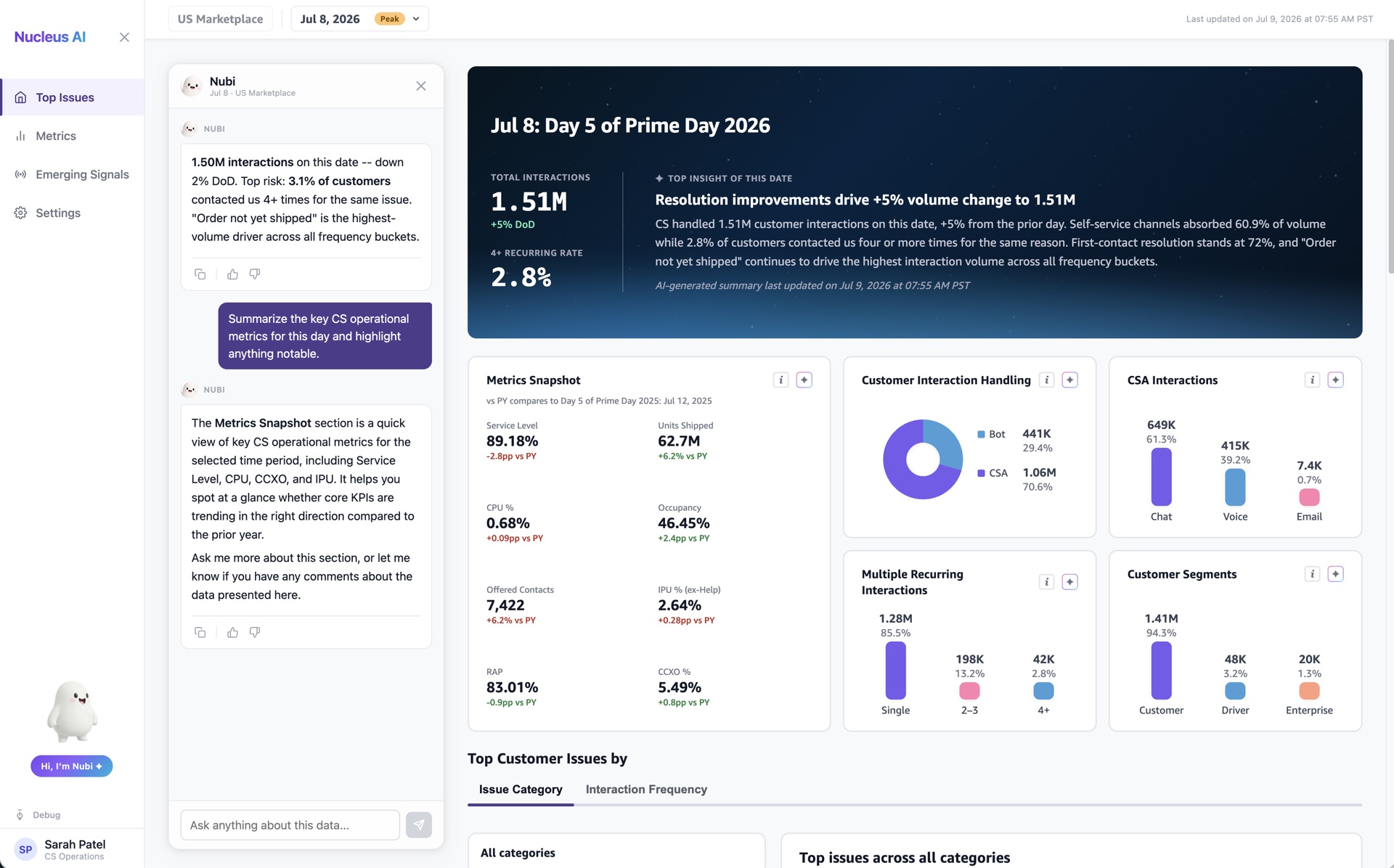
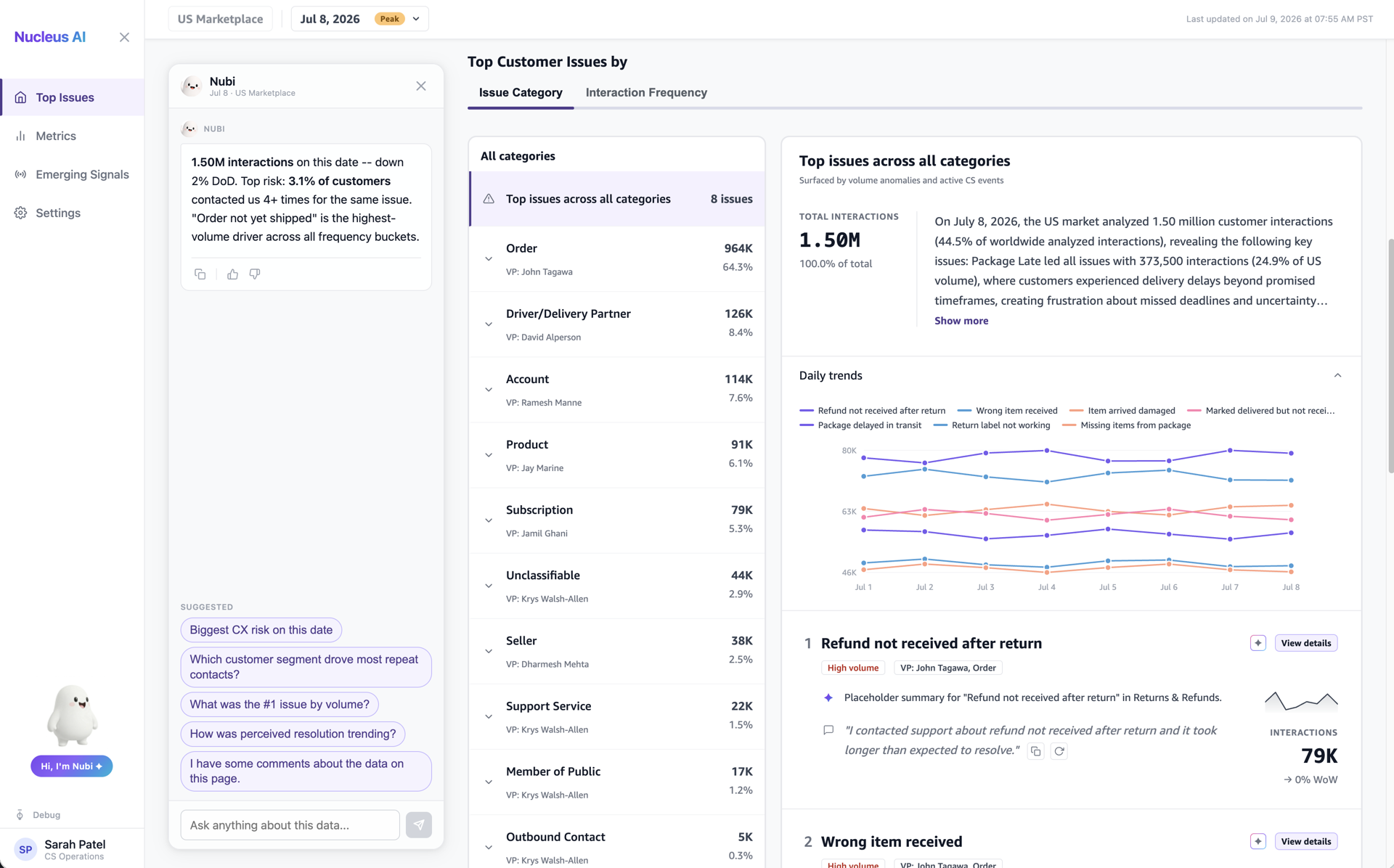
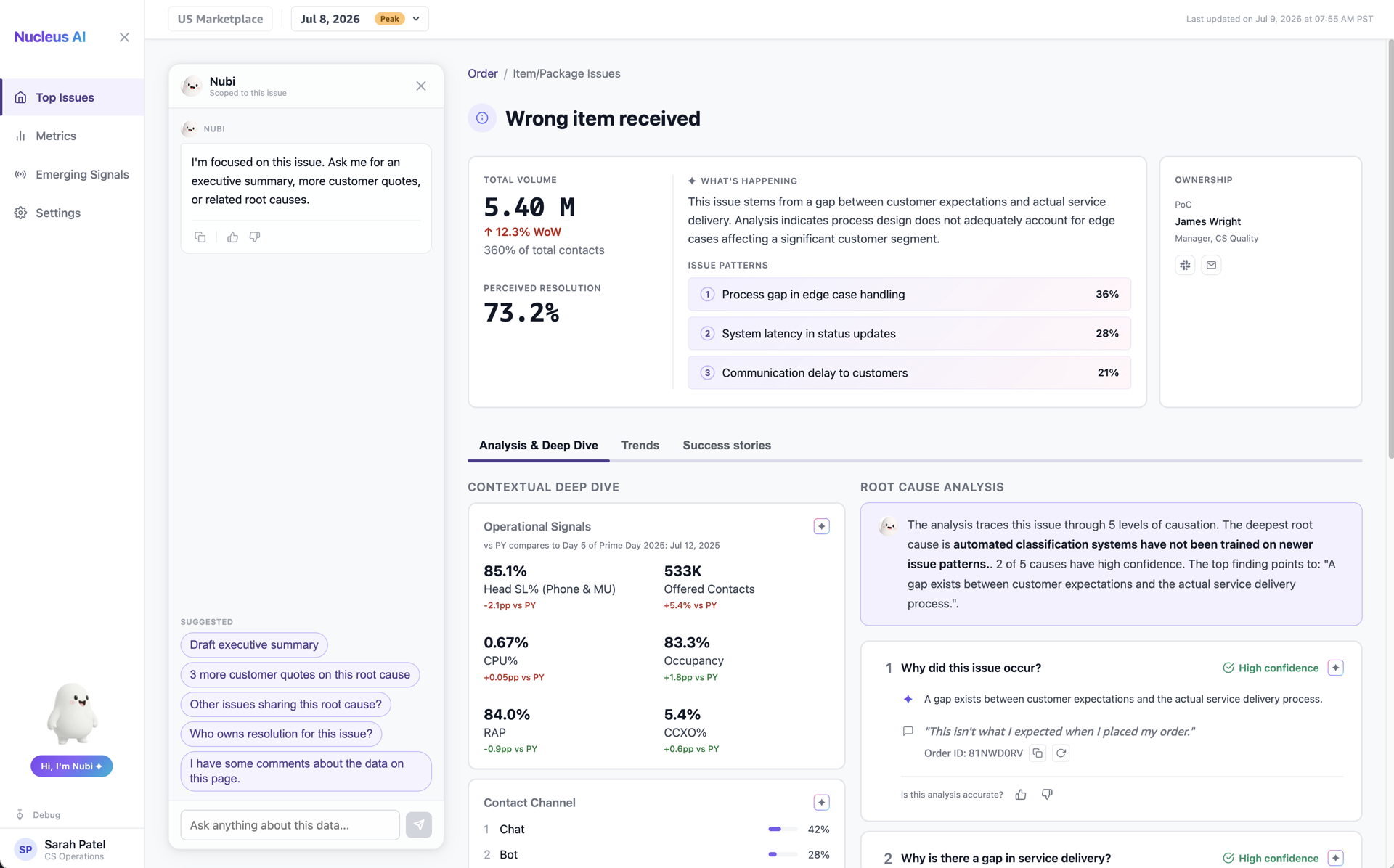
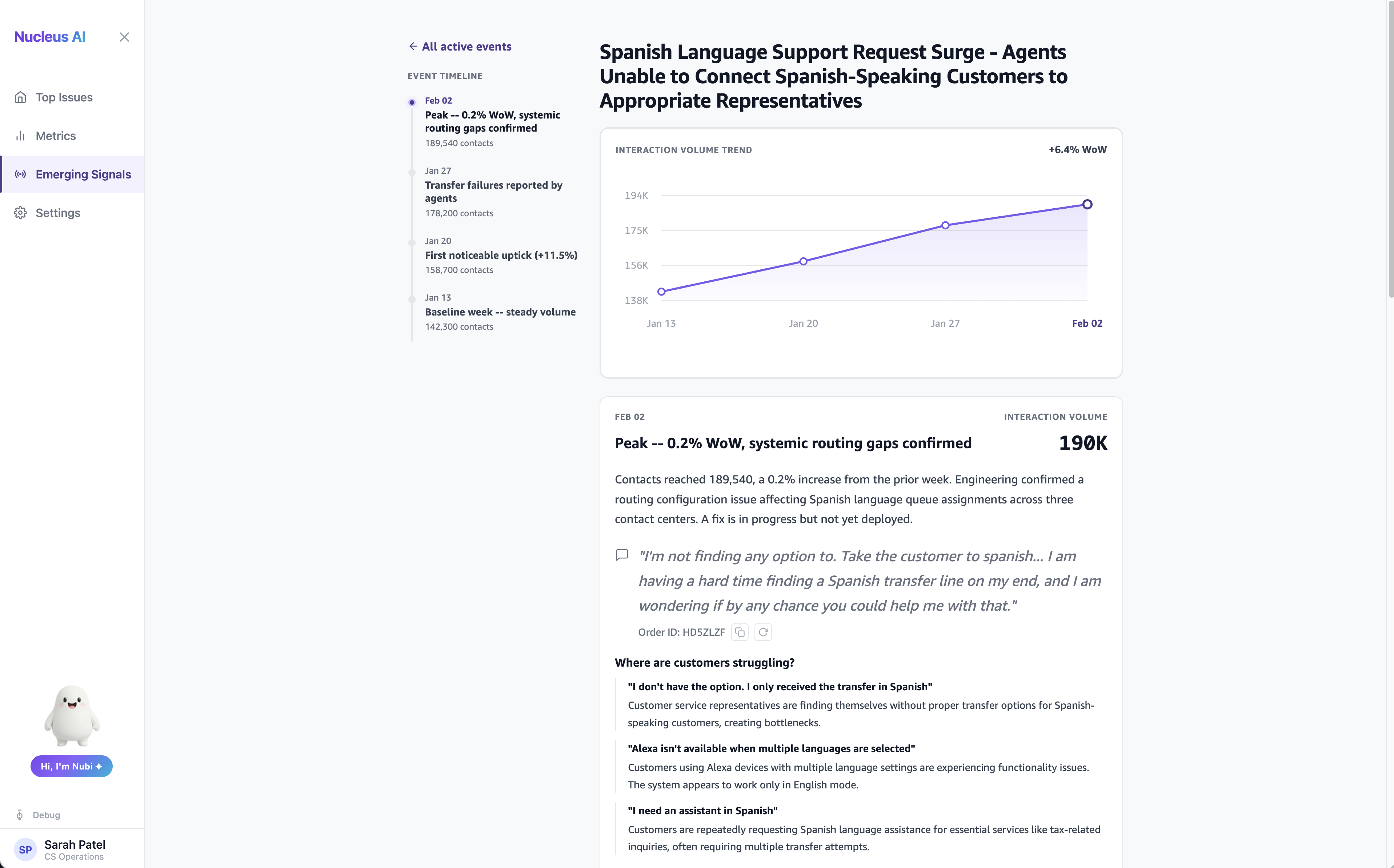
For demo purposes only — not the actual project or codebase, and does not contain any actual data.
This project is still in progress — and that's part of what makes it worth documenting.
The front-end engineering team is now building from the Kiro-generated code, using the handoff contract we defined together. We're actively working through what it means to ship a product where the design prototype and the dev build share the same codebase origin.
What's Working
Prototype-first process generated faster alignment. Leadership feedback on the Kiro prototype was strong. The 5-why AI analysis concept resonated clearly with CS team leaders in interviews.
What's Still Open
Finalizing the handoff mechanism between design-initiated builds and dev builds. Defining ownership boundaries between design and engineering in a vibe-coded workflow.
Currently extending the product into a new direction — evolving from a Week over Week WBR-style report into a daily report format, with support for peak seasons like Prime Day where the cadence and stakes of monitoring change significantly.